Luxury properties are no longer judged solely by aesthetics or square footage. Today’s most valuable estates are defined by how well they adapt —across decades, ownership changes, technological shifts, and lifestyle evolution. A home that feels effortless ten years from now is rarely the result of chance; it is the outcome of deliberate, forward-thinking planning decisions made long before construction or renovation begins.
Future-proofing a high-end property means thinking beyond immediate needs and design trends. It requires aligning land use, outdoor environments, structural systems, and long-term maintenance strategies into a single vision. When done correctly, the property remains resilient, efficient, and desirable without constant overhauls. When done poorly, even the most expensive homes can become outdated, inefficient, or costly to maintain far sooner than expected.
Smart planning isn’t about predicting the future perfectly —it’s about creating flexibility, minimizing constraints, and reducing the need for reactive fixes later on. The following sections walk through how thoughtful decisions at each stage of development connect together to protect both lifestyle and long-term value.
Starting With the Land to Shape Every Future Decision
Every future-proof property begins with an honest understanding of the land itself. Before architectural sketches or material selections enter the picture, the physical characteristics of the site dictate what is sustainable, expandable, and cost-effective over time. Land is not a neutral canvas; it actively shapes what can be built, how it can function, and how much flexibility the property will retain years or even decades down the line. When these realities are addressed early, planning decisions feel intentional. When they are ignored, they tend to resurface later as expensive limitations.
A comprehensive property survey provides far more than boundary lines. It serves as a diagnostic tool that uncovers how the land actually behaves rather than how it appears at first glance. Elevation changes influence drainage and access. Soil conditions affect foundation strategies. Existing easements or setbacks can quietly eliminate future expansion options if they aren’t accounted for early. Environmental factors such as flood zones or protected areas can shape long-term use far more than initial design preferences. Ignoring this information often leads to costly retrofits, compromised layouts, or underused portions of the property later on —outcomes that are especially frustrating when they could have been avoided with better early insight.
At this stage, planning should focus less on aesthetics and more on capability. Understanding what the land can support allows future design decisions to remain flexible rather than reactive. This includes mapping not only where structures can be placed today, but where they could reasonably be added tomorrow without major disruption.
Key considerations at this stage include:
- Identifying buildable areas that allow for future additions without regradingThis means looking beyond current plans and reserving space for potential expansions, guest structures, or functional upgrades. Strategic placement reduces the need for expensive earthwork later and preserves natural land contours.
- Understanding water flow to prevent long-term erosion or foundation issuesDrainage patterns influence everything from basement integrity to outdoor usability. Addressing water movement early helps prevent recurring damage and protects both structures and surrounding land.
- Planning utility corridors that won’t limit expansionUtilities placed without foresight can block future building zones or require disruptive relocation. Early planning ensures infrastructure supports growth rather than restricting it.
- Establishing clear access routes for maintenance and emergency needsLong-term usability depends on access that remains practical as the property evolves. Thoughtful routing prevents future conflicts with additions or landscape changes.
Financial strategy is closely tied to these early decisions. Properties acquired or developed with the support of banks that offer land loans often involve phased construction or extended development horizons. In these scenarios, land planning must accommodate incremental progress rather than assuming everything will be built at once. Infrastructure, access, and site preparation should support both current use and future phases without requiring major rework.
Smart planning aligns land use with financing structures so that future improvements can be made efficiently and strategically. Instead of forcing design changes to fit financial realities later, early coordination allows both to evolve together. This approach reduces risk, preserves optionality, and keeps long-term goals intact.
When land intelligence and financial planning work together, the property gains flexibility instead of constraints. Decisions made at this stage ripple forward, informing exterior layouts, structural placement, and system planning. With a solid foundation rooted in real site conditions, exterior and interior design decisions are free to evolve logically rather than reactively, creating a property that remains adaptable long after the initial build is complete.
Translating Site Intelligence Into Enduring Outdoor Design
Once the land’s realities are understood, the next step is transforming raw data into outdoor environments that improve with time rather than degrade. This is where long-term thinking separates cohesive estates from properties that feel disjointed or constantly under revision.
A luxury landscape company approaches outdoor planning as an extension of the property’s architecture and long-term use patterns, not as decorative afterthoughts. The goal is to create spaces that mature gracefully, accommodate changing needs, and require minimal redesign as tastes or ownership evolve.
Thoughtful landscaping decisions focus on:
- Plant selections that grow predictably and won’t interfere with structures
- Circulation paths designed for future traffic patterns and accessibility
- Lighting systems that can adapt to new technologies
- Irrigation layouts that allow for expansion without excavation
Instead of maximizing visual impact immediately, experienced planners prioritize adaptability. Open lawns may later become garden rooms. Tree placements are selected with future canopy growth in mind. Outdoor living areas are positioned where they can be expanded without disrupting surrounding systems.
By treating outdoor spaces as living systems tied to the land’s long-term plan, the property avoids the cycle of frequent redesigns that often undermine both aesthetics and value.
Reinforcing Outdoor Spaces With Long-Term Structural Elements
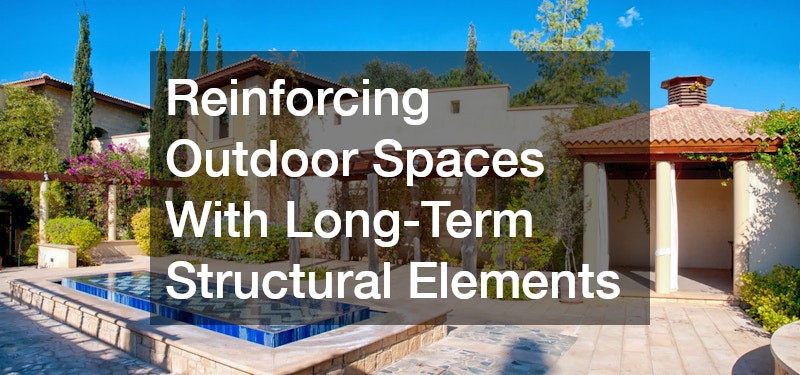
Living landscapes thrive when they are anchored by permanent, well-planned structural features. This is where durability, functionality, and foresight intersect to reduce maintenance demands and protect the integrity of the estate.
Hardscaping plays a crucial role in stabilizing outdoor environments while guiding movement and use. Unlike plantings that change seasonally, structural elements define how a property functions over decades. When thoughtfully integrated, they prevent erosion, manage water flow, and support both aesthetics and safety.
Effective structural planning emphasizes:
- Materials that withstand climate and usage without frequent replacement
- Drainage solutions integrated into terraces and walkways
- Retaining systems designed for long-term soil movement
- Pathways that accommodate future accessibility needs
One of the most common mistakes in high-end properties is treating structural features as purely decorative. Over time, improperly planned stonework or masonry can crack, shift, or require invasive repairs. By prioritizing engineering and longevity over short-term visual trends, outdoor spaces remain stable and adaptable.
As durability principles move from the landscape into the building itself, the focus naturally shifts toward the systems that support daily comfort.
Designing Mechanical Systems With Growth and Change in Mind
Interior comfort systems are among the most expensive and disruptive elements to replace once a property is fully built. Future-proof planning means designing these systems not just for current square footage, but for potential expansions, changing usage patterns, and evolving efficiency standards.
Coordinated HVAC services during the planning phase allow systems to be sized and zoned strategically rather than reactively. This prevents the inefficiencies that arise when additions are bolted onto undersized infrastructure.
Planning boiler installation with long-term adaptability in mind involves:
- Selecting systems that support modular expansion
- Designing mechanical rooms with space for future equipment
- Allowing access routes that avoid demolition during upgrades
- Preparing for alternative fuel sources or hybrid systems
Rather than maximizing capacity upfront, smart planning focuses on scalability. Systems that can grow alongside the property reduce upfront costs while avoiding the need for full replacement later. This approach also allows owners to adopt new technologies as they become viable, rather than being locked into outdated systems.
As system-level planning sets the stage, attention turns to the components most likely to require servicing over time.
Ensuring Core Heating Systems Are Maintainable Over Decades
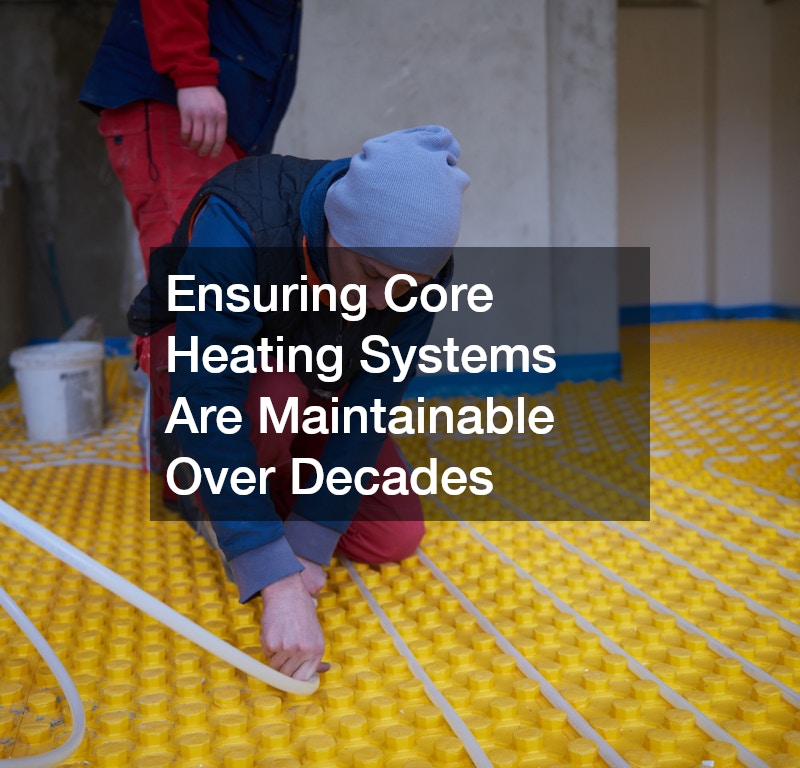
Even the most advanced systems will eventually require attention. Future-proofing means designing for serviceability as much as performance. Properties that fail to consider long-term maintenance often face unnecessary disruptions and inflated costs.
Thoughtful furnace repair planning begins long before a repair is ever needed. It starts with how systems are positioned, accessed, and supported within the building envelope.
Key design strategies include:
- Clear access panels and service clearances
- Logical equipment placement that avoids structural obstacles
- Selecting models with long-term parts availability
- Designing redundancy to prevent complete system downtime
When maintenance is anticipated, repairs become routine rather than emergencies. This reduces stress, preserves interior finishes, and extends system lifespan. It also allows owners to maintain comfort standards without compromising daily living.
Heating systems don’t operate in isolation, however. They rely on architectural elements that are often overlooked until problems arise.
Protecting Vertical and Venting Structures From Premature Failure
Some of the most expensive repairs in luxury properties stem from components that receive minimal attention during planning. Vertical and venting structures are prime examples. They bridge the gap between interior systems and exterior exposure, making them vulnerable to wear if poorly designed.
Planning for chimney repair begins with understanding that these structures must endure temperature fluctuations, moisture exposure, and structural movement over decades. Aesthetic integration alone is not enough.
Long-term protection strategies include:
- Using materials suited for sustained thermal stress
- Designing liners and flues for inspection and replacement
- Providing safe access points for maintenance
- Coordinating venting paths with future system upgrades
When chimneys and venting systems are planned as part of the overall mechanical strategy, they remain functional without compromising architectural integrity. This foresight reduces the likelihood of invasive repairs that disrupt both interiors and exteriors.
With core systems secured, attention can turn toward elements that carry emotional and symbolic weight.
Integrating Legacy Features Without Limiting Future Use
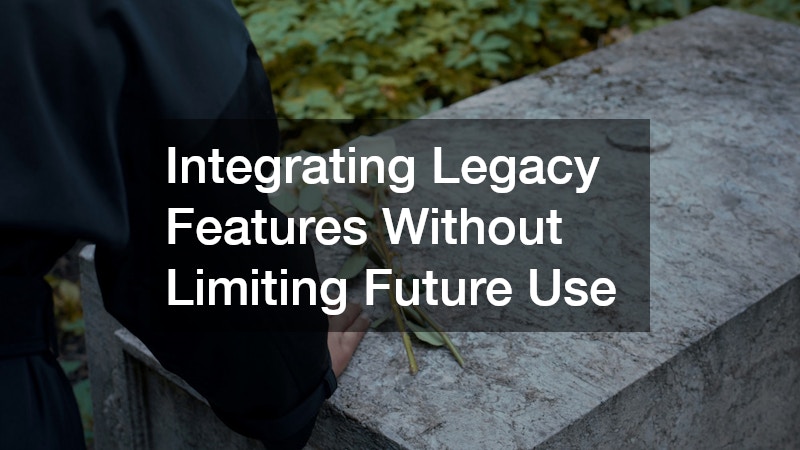
High-end properties often include elements intended to outlast generations. These features carry personal, historical, or cultural significance and must be planned with the same rigor as structural components. Unlike decorative features that can be updated or replaced, legacy elements are meant to remain fixed in both place and meaning, which makes early planning essential. When their role within the property is clearly defined from the outset, they strengthen the identity of the estate rather than creating future limitations.
Memorials and monuments require careful placement to ensure they remain protected without restricting future development or land use. Their permanence demands foresight, not just sentiment. Poorly positioned elements can unintentionally block expansion corridors, interfere with utilities, or become isolated as surrounding areas evolve. Thoughtful planning considers how the property may change over time and ensures these features remain integrated rather than sidelined or compromised.
Effective integration considers:
- Structural foundations suitable for long-term stabilityThese elements often require deeper or more specialized foundations than decorative features. Planning for soil conditions, drainage, and load-bearing capacity helps prevent settling, cracking, or shifting that could undermine both safety and appearance over time.
- Environmental exposure and material durabilitySun, moisture, temperature changes, and vegetation all affect longevity. Selecting materials and finishes that weather predictably ensures the feature ages with dignity rather than deterioration.
- Maintenance access without disrupting surrounding spacesEven permanent features require periodic care. Designing unobtrusive access routes allows cleaning, repairs, or restoration to occur without disturbing nearby landscapes or structures.
- Alignment with long-term circulation and property plansWalkways, sightlines, and access routes should evolve around these elements, not conflict with them. Proper alignment allows the feature to remain a focal point as the property grows or changes.
When legacy elements are incorporated thoughtfully, they enhance the estate’s narrative rather than constrain its future. They become intentional markers of history and identity, seamlessly woven into the broader property design. Poor placement, by contrast, can limit expansion, complicate maintenance, or require relocation —undermining their intended permanence and emotional value.
By aligning emotional significance with practical planning, these features become enduring assets rather than obstacles. They contribute meaning and continuity while respecting the evolving needs of the property, ensuring their presence remains purposeful and respected across generations.
Future-proofing a high-end property is not achieved through isolated upgrades or trend-driven decisions. It is the result of a unified strategy that connects land, exterior environments, structural elements, mechanical systems, and long-term maintenance into a single, adaptable vision.
Smart planning prioritizes flexibility over perfection and longevity over immediacy. By anticipating change instead of reacting to it, property owners protect both their investment and their quality of life. The most successful luxury properties are not those that resist time, but those designed to evolve with it —gracefully, efficiently, and intentionally.